
Running a small nonprofit in Phoenix involves a particular relationship with technology: you acquire equipment in cycles dictated by grants, replace it when it fails rather than when it is merely outdated, and eventually accumulate a storage room of devices that have been retired but not yet dealt with. When we cleared our storage room last spring, the count was seventeen computers, eight monitors, four printers, two scanners, and a quantity of peripheral equipment that suggested our organization had been quietly hoarding cables since at least 2016.
Finding a responsible solution for all of it required navigating the same landscape that most Phoenix organizations face: a city program designed for individual residents, a handful of recyclers whose processes are not entirely transparent, and the persistent question of what happens to the data on fourteen of those seventeen computers.
Why Data Destruction Was the First Consideration
Nonprofit organizations handle sensitive information. Donor records, client files, financial data, staff correspondence — the category of information a small nonprofit accumulates over a decade of operation is substantial. The assumption that wiping a computer before donation or recycling handles this problem is, unfortunately, incorrect.
Standard deletion and factory reset procedures remove the operating system's record of file locations. The files remain physically present on the drive. Recovery software that can retrieve this data is commercially available, inexpensive, and does not require technical expertise. For an organization with any data compliance obligations — and most nonprofits handling client records have them — this is an active liability, not a theoretical concern.
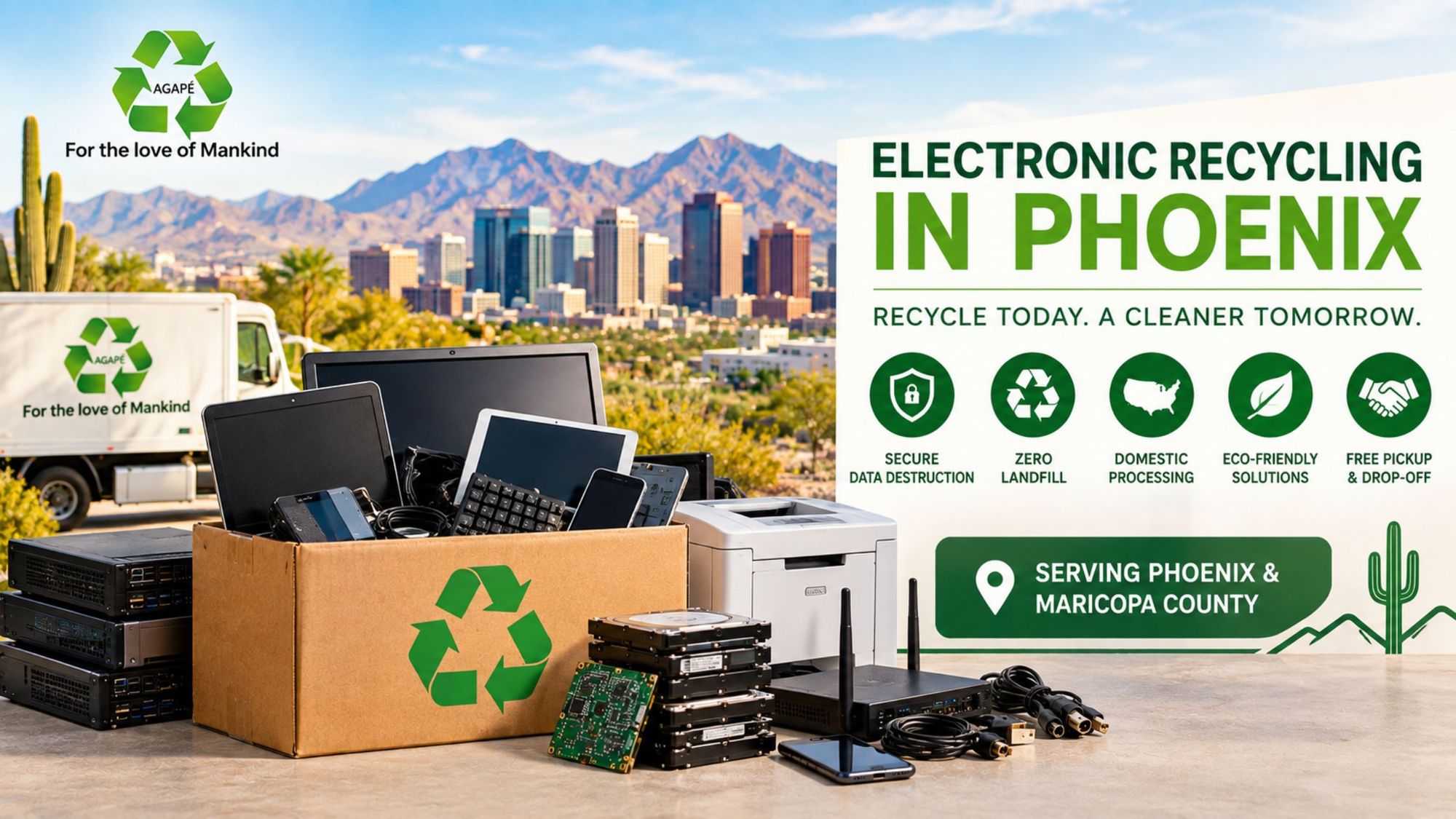
The recycler we engaged for our electronic recycling in Phoenix, AZ performed a DOD 5220.22-M 7-pass military-grade overwrite on every data-bearing device before anything else happened. Three drives that had failed and could not be wiped were degaussed and physically destroyed. We received a Certificate of Data Destruction for each device — specifying the destruction method, the serial number, and the date — at no additional charge. This documentation went directly into our compliance records.
What We Learned About Choosing a Recycler
Not every organization offering electronics recycling in Phoenix, AZ handles the job the same way. The questions that proved most useful before we made our selection:
- What specific data destruction method is used? Vague answers — 'we wipe everything' — are not acceptable. Named methods with documentation are.
- Is processing handled domestically, or are electronics exported overseas? Export is a common cost-reduction measure that shifts environmental and data risk to communities elsewhere.
- Is the operation zero-landfill? Every material stream from every device should have a documented destination.
- Is pickup available for commercial quantities, and is it free? Certified recyclers handling volume typically offer free commercial pickup — the recovered material offsets collection costs.
The recycler we chose answered all four questions directly and without hesitation. The ones that did not answer directly were removed from consideration.
How the Pickup Worked
We scheduled a commercial pickup. One vehicle arrived at the time confirmed. The seventeen computers, eight monitors, four printers, two scanners, and the cables were loaded and confirmed against a device manifest. The recycler noted that everything would be processed through its zero-landfill system in Phoenix, with no overseas export at any stage.
The storage room is now a conference room. The certificates of data destruction are filed. The process took less time than the three meetings we held over the previous six months discussing what to do about the storage room.
A Practical Note for Phoenix Organizations
Certified e-waste recyclers serving the Phoenix metro area provide free pickup and processing for nonprofit organizations, businesses, schools, government offices, and healthcare providers alongside residential clients. The service does not scale down for smaller organizations — a nonprofit retiring ten devices receives the same documented data destruction process as a corporation retiring ten thousand.
The cables from 2016 are gone. The compliance documentation is complete. The experience, in retrospect, was straightforward in proportion to how directly we approached it. The complexity was in the anticipation, not the actual process.